Metal Pall Rings Above Activated Alumina Beds: Distribution and Selection Notes
November 27, 2026 · Application Guide
In an activated alumina dryer, adsorption is carried out by the alumina itself. The interface layer above the bed decides whether the gas arrives evenly across the whole cross-section. A metal pall ring gives that interface open flow paths and keeps distribution stable through the operating cycle.
Where the Distribution Layer Sits
An activated alumina drying bed is simple in concept: alumina beads or granules are held above a support grid inside the vessel, and wet gas passes through them so the alumina can adsorb water. In practice the bed has several zones. The alumina does the adsorption; below it a coarser support medium keeps the beads off the grid and collects fines; above it a distribution or transition layer spreads the incoming gas before it contacts the alumina. Without that upper layer, gas tends to follow the easiest path — often along the wall or through a channel opened during loading — so part of the alumina stays under-used while another part is overloaded. The problem becomes clearer in cyclic service, where every regeneration and re-pressurisation can shift the bed slightly. A metal pall ring placed at the interface gives the gas room to turn and spread, so the whole cross-section is used rather than a few preferred lanes. That is why the interface deserves the same attention as the alumina specification itself.
How the Slotted Ring Geometry Helps
A metal pall ring is a short cylindrical ring whose wall has been punched inward to form slots and tongues. That geometry matters at a bed interface. The open slots and hollow core give a high void fraction, so gas can move sideways as well as vertically instead of being forced through a narrow gap. The inward tongues create extra surfaces where the flow separates and re-attaches, which helps correct a non-uniform incoming profile. Because the ring is open, it does not act as a solid lid on the alumina; it holds its shape under the weight of the bed and through repeated temperature swings. Compared with a dense layer of loose granules, a metal pall ring distribution layer can spread flow at a moderate pressure drop, and its open structure traps fewer fines that would otherwise blind the top of the alumina bed. Above a top-mounted distributor or beside a side inlet, this buffering zone is often what keeps the alumina working evenly.
50 mm Rings, Alloy and Ceramic Alternatives
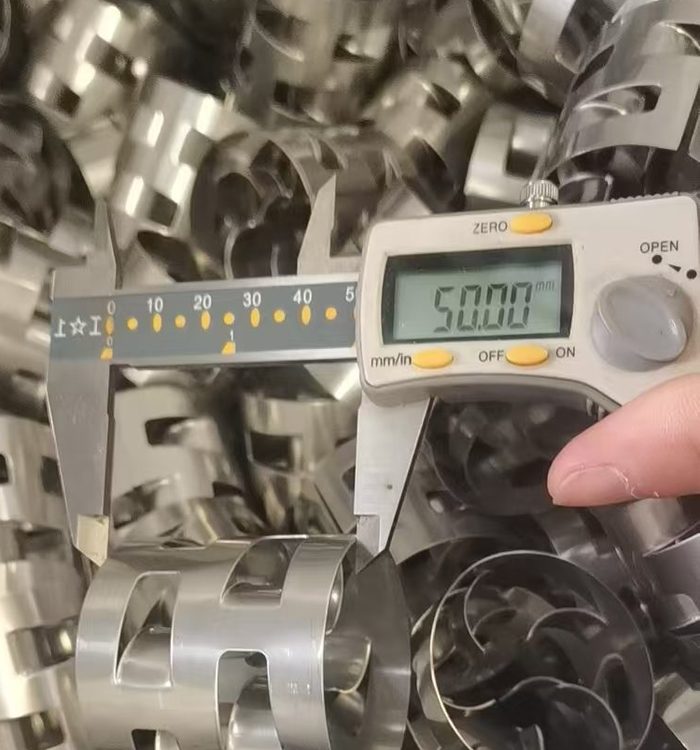
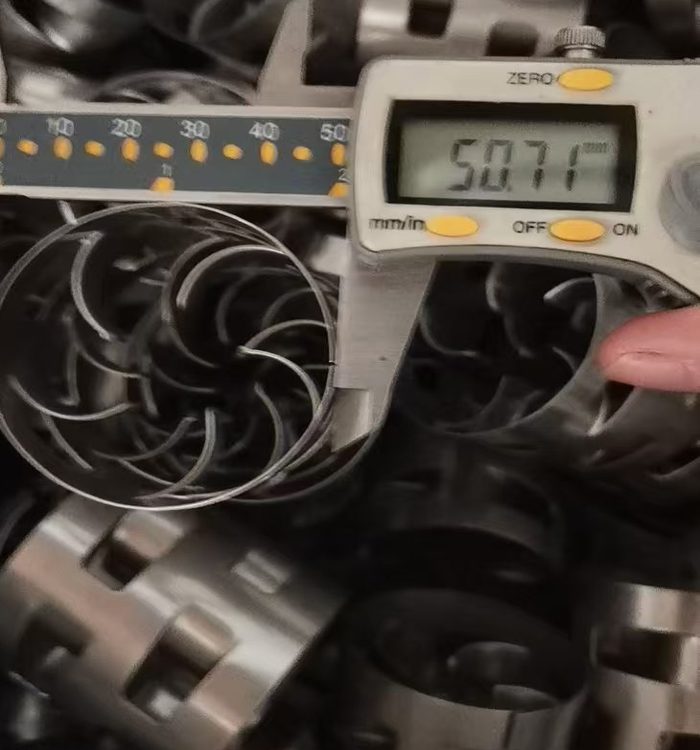
A 50 mm metal pall ring is a common choice for this interface layer because it is clearly coarser than typical alumina beads and is easy to handle during loading. The final size and depth still depend on bead diameter, superficial gas velocity and vessel geometry, so they should be checked against the tower design. Material selection is a balance. Type 304 stainless steel is widely used where the stream is dry and only mildly corrosive; 316L is preferred when moisture, chlorides or higher regeneration temperatures make pitting and scaling more likely. Neither alloy should be assumed suitable without looking at the actual composition, temperature and regeneration cycle. Ceramic saddles remain a valid alternative: they are inert, dimensionally stable and suit services where metal internals would corrode. They are, however, more brittle during loading and can generate fines if chipped. Metal rings tolerate mechanical handling better, but the alloy must match the stream. A wrong alloy choice can turn a sound distribution layer into a maintenance problem.
Loading and Pressure-Drop Checks
Before startup, a few practical points are worth confirming:
The metal packing catalogue at xinquan.net.cn lists available pall ring sizes and stainless steel grades. Send your vessel diameter, alumina bead size and service conditions for a distribution-layer recommendation.